How to Start a Watch Brand in 2026: The Complete Playbook for First-Time Founders
Everything between “I have an idea” and “my watches are shipping” — positioning, design, manufacturing models, factory selection, sampling, mass production and launch, with the real numbers nobody publishes.
You’ve sketched a dial on a napkin. You’ve caught yourself redesigning your logo at midnight. You know your audience would love it. The only thing standing between you and a real watch brand is a roadmap — and the honest answers to questions like “what does this actually cost?” and “how do I know a factory won’t ruin me?” This guide is that roadmap.
Over the past decade we’ve walked more than a hundred first-time founders — Kickstarter creators, Etsy sellers turned brand owners, designers, and corporate-gift buyers — through their first production run from inside the factory. The pattern among those who succeed is remarkably consistent, and so are the mistakes of those who don’t. This guide distills both.
What you’ll learn
-
- The Reality Check: What Starting a Watch Brand Actually Takes
- Step 1 — Position Your Brand Before You Design Anything
- Step 2 — Design a Watch People Can Actually Buy
- Step 3 — Pick Your Manufacturing Model: OEM vs ODM vs Private Label
- Step 4 — Choose a Watch Manufacturer (Without Getting Burned)
- Step 5 — Prototype: Where Brands Are Made or Broken
- Step 6 — Mass Production: Specs, QC, Certifications, Logistics
- Step 7 — Launch: Pricing, Crowdfunding and Your First Sale
- Step 8 — Scale: From One Collection to a Real Brand
- FAQ: What First-Time Founders Ask Us Most
1. The Reality Check: What Starting a Watch Brand Actually Takes
First, the good news, because it’s genuinely good: there has never been a better time to start a watch brand. The “microbrand” movement — independent labels producing limited runs of design-driven watches — has rewritten the rules of an industry that Swiss conglomerates owned for a century. A first-time founder with $20,000 and a clear point of view can today do what required millions in capital and retail relationships a generation ago.
Three forces made this possible. Direct-to-consumer e-commerce removed the gatekeepers. Crowdfunding platforms turned audience demand into pre-paid production capital. And contract manufacturers — factories like ours — built the engineering and quality-control systems to serve small brands at volumes that were once turned away at the door.
Now the honest part. A watch is not a t-shirt. It is one of the most densely engineered consumer objects sold at retail: 60–150 precision components, tolerances measured in hundredths of a millimeter, a case that must survive water pressure, and a supply chain that spans movement makers, dial printers, hand setters, case forgers and strap workshops. Founders who treat it like a simple print-on-demand product fail. Founders who respect the complexity — and pick partners who manage it for them — build brands that last.
Here is the full journey at a glance:
| Stage | What happens | Typical timeline |
|---|---|---|
| 1. Positioning | Audience, price tier, brand story, differentiation | 1–2 weeks |
| 2. Design | Concept to production-ready specifications | 1–2 weeks |
| 3. Manufacturing model | OEM / ODM / private label decision | 1 week (parallel) |
| 4. Factory selection | Evaluating,NDA, quotes, sampling agreement | 2–4 weeks |
| 5. Prototyping | 2D/3D drawings, prototype production. | 6–8 weeks |
| 6. Mass production | Production, IQC, QC, testings, packaging, inspection | 8–10 weeks |
| 7. Launch | Crowdfunding or pre-order | 2–8 weeks (parallel) |
Total: four to seven months from idea to watches in hand, and $15,000–$40,000 all-in for a typical first collection of 200–300 pieces. If someone promises you either number dramatically lower, keep reading — Chapter 4 will tell you exactly what’s being cut.
From the factory floor, We can usually tell within the first conversation which founders will make it. It’s not design skill or budget — it’s whether they’ve thought about who the watch is for before what the watch looks like. That single distinction is the whole of Chapter 2.
2. Step 1 — Position Your Brand Before You Design Anything
Every week we receive inquiries that begin: “I want to make a watch like a Rolex Submariner but cheaper.” We gently redirect them, because “like X but cheaper” is not a brand — it’s a discount. The microbrands that sell out their runs — think of the labels that dominate watch forums and crowdfunding pages — all answer three questions before a single dial is drawn.
1) Who is your customer, specifically?
“Watch enthusiasts” is not an audience. “Left-handed divers who want a titanium watch under $800” is. The most successful first collections we’ve produced were aimed at narrow, passionate tribes: firefighters, watch photographers, vintage-racing fans, EDC (everyday carry) communities. Narrow audiences are findable, marketable, and — critically for a first run of 200 pieces — big enough.
2) What price tier will you compete in?
Price is positioning. Choose your tier deliberately, because it dictates materials, movements, and margin:
| Tier | Retail price | Typical build | Who wins here |
|---|---|---|---|
| Entry microbrand | $150–$300 | 316L steel, quartz or Miyota 8215, mineral crystal, 3-5 ATM waterproof | Volume plays, gift brands, subscription models |
| Core microbrand | $300–$700 | 316L/904L steel, Swiss Sellita or Miyota movement, sapphire crystal with AR coating, 5-10 ATM waterproof | The sweet spot for most first-time founders |
| Premium microbrand | $700–$1,500+ | Damascus steel, forged carbon, titanium, Sellita movements, 10-20 ATM waterproof | Story-driven, limited editions, collector audience |
Notice that materials do a lot of the storytelling in the upper tiers. A Damascus steel case with its one-of-a-kind forged pattern, or a forged carbon case with its marbled texture, gives a small brand a visual signature that no marketing budget could buy — which is why material-first differentiation is the most common path we see for brands that want to command $700+ without heritage.
3) What’s your story — and is it true?
Modern buyers audit origin stories. “Designed in Copenhagen, built by a family-run workshop” works only if it’s accurate. The strongest positioning we see from first-time founders is honest and specific: a third-generation machinist making watches for people who work with their hands beats luxury timepieces for the modern gentleman every single time.
From the factory floor, Founders often ask us to sign NDAs about their “unique concept.” In ten years, we’ve never seen two founders arrive with the same brand idea. What we have seen, over and over, is the same unpositioned idea — a nice watch, reasonably priced, for everyone — fail for being exactly that. Your idea is safe. Your differentiation is what needs work. (Chapter 5 covers how IP actually gets protected.)
3. Step 2 — Design a Watch People Can Actually Buy
Design for a watch brand is a negotiation between two people: the founder with the vision, and the production engineer who has to manufacture it at your budget. The founders who succeed learn enough engineering vocabulary to hold up their side of that negotiation. Here’s the vocabulary.
The spec sheet: your five core decisions
-
- Case material & size. 316L stainless steel is the industry workhorse; 904L is harder and more corrosion-resistant with a brighter polish, but much more expensive than 316L stainless steel. Case diameter has settled in the 36–40mm range for most new brands — the 42mm+ era is over. Watch buyers now check lug-to-lug distance (aim for under 47mm) more than diameter.
-
- Movement. The heart and the single biggest cost driver. Quartz (Ronda, Miyota) for entry price points; the Seiko NH35 and Miyota 9039 automatics dominate the $300–$700 tier because of reliability and hackable/hand-winding features; Sellita SW200-1 for premium tiers where “Swiss movement” matters to the story. Our full comparison — accuracy specs, prices, and which movements we no longer recommend — is in Watch Movements for Micro Brands: Miyota vs Sellita vs Seagull.
-
- Crystal. Sapphire crystal is non-negotiable above $300 retail. Buyers know the word, and scratch resistance is the number-two satisfaction driver in reviews (after accuracy).
-
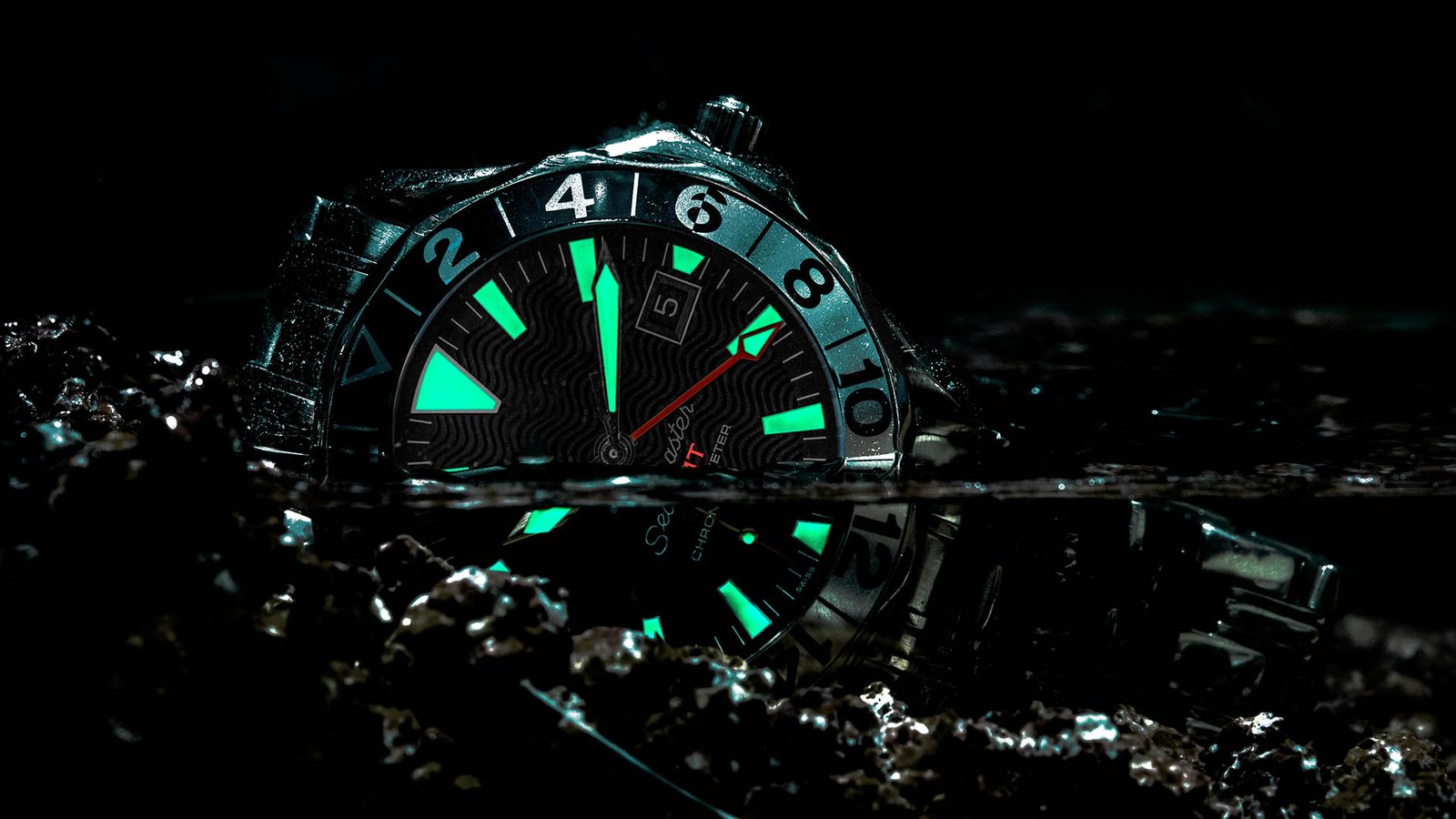
- Dial, hands & lume. This is where your brand identity lives and where manufacturing variance bites. Printed dials are economical; applied indices cost more but read “premium” instantly. Super-LumiNova (or Swiss-grade equivalents) on hands and indices is expected in the core tier.
-
- Strap system. Offer quick-release spring bars from day one — your customers will swap straps, and they’ll thank you for making it easy.
Water resistance: the spec everyone gets wrong
30m water resistance does not mean “safe for swimming” — it means splash-resistant. If your brand includes a dive or sports watch, spec 100m minimum with screw-down crown, or 200m for a true diver, and require your factory to pressure-test 100% of units (we test every dive watch to 20ATM). Nothing generates returns and one-star reviews faster than an overclaimed depth rating.
Design for manufacturing (DFM): the 10% conversation
Here is the part most first-time founders miss: about 10% of design decisions drive about 50% of your unit cost. A dial with eight applied indices and a date window is dramatically cheaper to produce than an open-heart dial with fourteen multi-layer indices — not because the second is harder, but because of yield: every additional delicate operation multiplies reject rate. A factory with in-house engineering will review your design and tell you, line by line, what each aesthetic choice costs. That DFM conversation, done early, is worth thousands of dollars and weeks of schedule. If a factory quotes your design without asking a single question about it, walk away — that’s a quote based on hope, not engineering.
From the factory floor, The best first-collection design we ever received was from a founder who wrote us a one-page brief: three reference watches, what he loved about each, and one sentence about his customer. Nothing was over-designed, every element had a reason, and the run sold out in nine days. Restraint is a design skill.
4. Step 3 — Pick Your Manufacturing Model: OEM vs ODM vs Private Label
“Custom watch manufacturer” describes three very different relationships. Picking the wrong one for your situation is the most expensive early mistake a founder can make — so we wrote a full comparison in OEM vs ODM vs Private Label: Which Model Fits Your Brand? The short version:
| Model | What you control | Typical MOQ | Lead time | Best for |
|---|---|---|---|---|
| Private label | Logo, packaging (existing design) | 100–200 pcs | 6–8 weeks | Testing a market; corporate gifts; lowest capital |
| ODM | Dial, hands, case finish on proven platform | 100–300 pcs | 8–10 weeks | First-time founders wanting distinct identity at moderate cost |
| OEM (full custom) | Every component, from case architecture up | 300–500 pcs | 2–3 months | Founders with design assets and proven demand |
One nuance the tables online never mention: the lines are blurring at good factories. On our floor, a founder can start ODM — customizing dial, hands, indices, case finish and strap on one of our proven platforms — and make it look like nothing else on the market, because the “platform” is a case architecture, not a finished design. Many brands we now produce at full OEM scale started exactly there. The model you start with is not the model you’re married to.
MOQ — minimum order quantity — is the constraint that shapes all three decisions, and it deserves its own math. We break down how factories actually calculate MOQ, when it’s negotiable, and the real unit-economics of a 100-piece run vs a 500-piece run in Watch MOQ Explained: How Many Watches Do You Really Need to Order?
From the factory floor, Roughly 70% of the first-time founders who ask us for full OEM are better served by ODM for collection one. The honest reason: your first collection is a hypothesis about your audience. Make the hypothesis testable, then invest in full custom when the market has voted.
5. Step 4 — Choose a Watch Manufacturer (Without Getting Burned)
This is the chapter founders most want to talk about, and no wonder: you’re about to wire five figures to a company you may have never visited, on a continent you may have never been to, and hand over the brand you’ve been dreaming about. Fear is rational here. So is process. Here’s ours.
Verify the factory, not the website
-
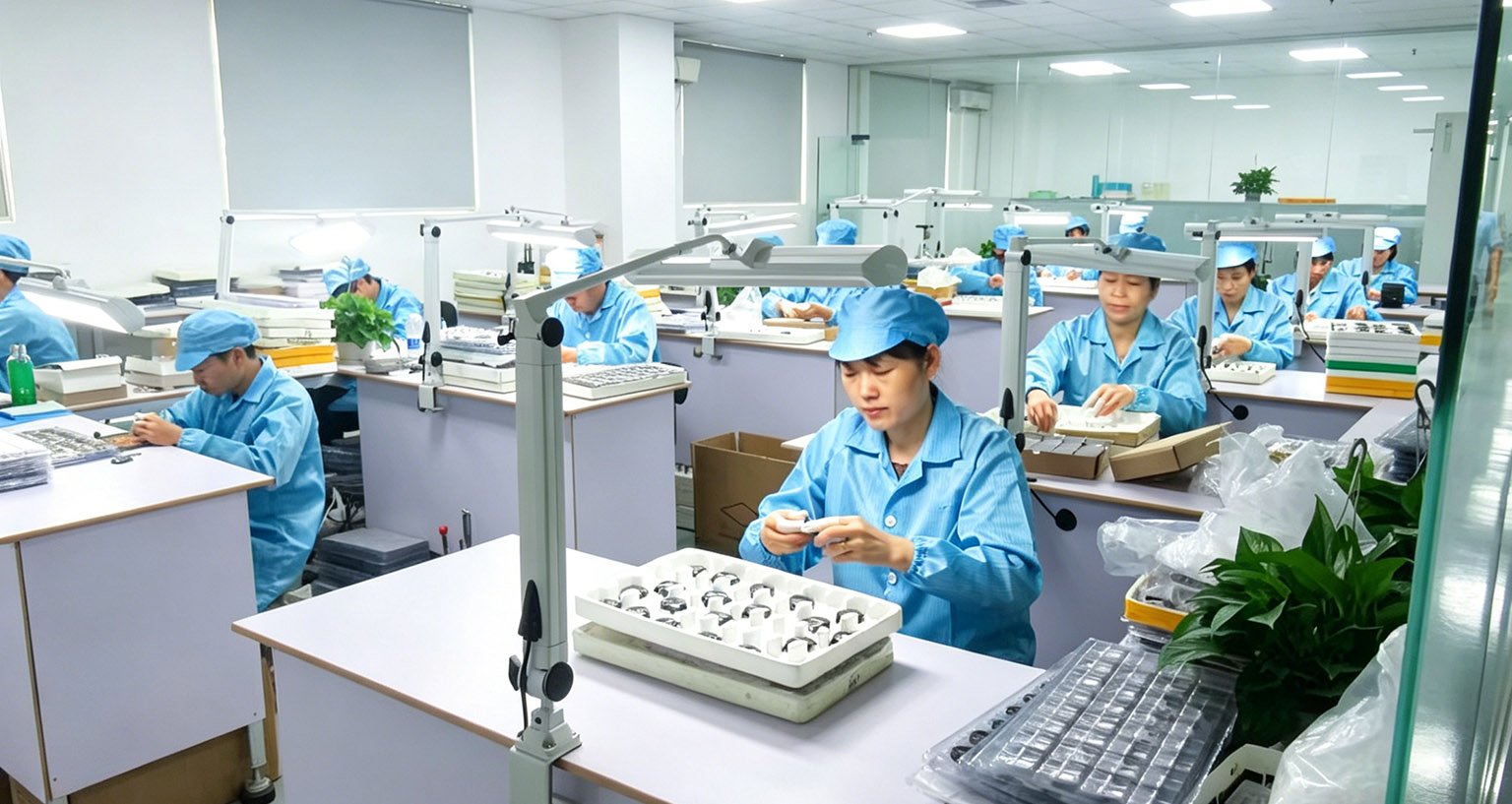
- Video-verify the floor. Ask for a live video call while walking the production line — not a slick company video. You want to see watch assembling, dial assembling, water-pressure testing, and QC stations in one continuous shot.
-
- Ask for three things in writing: their QC process (how many inspection stages, what AQL standard), their certifications (CE, RoHS, REACH for EU-bound goods), and their IP protection process (NDA templates, file handling, confidentiality terms for staff).
-
- Check their reference work. Can they show you real case studies — with photos, volumes, and outcomes — of brands at your stage? A factory that only name-drops one famous client but can’t show twenty working relationships with brands your size is telling you where you’ll sit in their priority queue.
-
- Test the communication you’ll live with. Your project manager’s responsiveness during the sales process is the best it will ever be. If quotes take five days now, imagine week seven of production.
Red flags that predict disaster
We wrote an entire article on this — Red Flags When Choosing a Watch Manufacturer — because the pattern is so consistent. The top three: quotes that arrive instantly with no questions about your design (they’ll either take any job or cut every corner), prices 30%+ below every other quote (something is being substituted — usually the movement or the steel), and refusal to do a paid sample before mass production (the single strongest predictor of a failed run).
Understand what you’re paying for
Quote anatomy, so you can compare apples to apples: unit price is driven by (1) movement, (2) case material & complexity, (3) dial complexity, (4) crystal, (5) strap, (6) packaging. Tooling or mold fees, sample fees, and freight are usually quoted separately — make sure every quote you compare includes them, and make sure the Incoterm (FOB, CIF, DDP — who pays which leg of shipping and duties) is identical across quotes. For a full cost breakdown of a realistic first collection — every line item from samples to customs — see The True Cost to Start a Watch Brand: 2026 Breakdown.
Want a factory’s opinion on your design — before you commit?
Send us your sketches or reference watches. Our engineering team will review feasibility, suggest cost-saving alternatives, and return a transparent quote range with MOQ and timeline — free, under NDA, within 48 hours.Get a Free Project Assessment
6. Step 5 — Prototype: Where Brands Are Made or Broken
Sampling is the least glamorous stage and the most important one. This is where your design stops being renders and becomes an object you can hold, weigh, and strap to your wrist. Budget for it — in money and in patience — accordingly.
How sampling actually works
-
- Engineering drawings (1–2 weeks). Your factory converts your design into production drawings — case dimensions, dial printing specs, hand lengths, movement seating. You approve these. Once approved, changes cost money; that’s normal and it’s how precision works.
- First sample (3–5 weeks). Typically a working prototype with production-intent components. Cost: usually $150–$500 per sample at reputable factories (premium materials like Damascus command more, because you’re forging real material).
- Iteration (1–3 rounds, 2–4 weeks each). Dial color is the classic offender — printed color shifts under clearcoat, lume application varies, hand lengths surprise people. Two to three rounds is normal and healthy. Nine rounds means someone skipped DFM.
- Golden sample approval. The final approved sample becomes the contractual reference for mass production. Photograph it exhaustively; both sides keep a signed copy. This document is what protects you.
The test founders skip and always regret
Wear your prototype. Not for an evening — for two weeks, every day, including the shower (if the spec claims it). Check the timekeeping against a reference app daily. Feel the crown. Look at the dial at noon sun and at midnight lume. Every founder who skips real-world wear discovers something in their first customer review instead.
From the factory floor, The one instruction we give every founder at golden-sample stage: approve what you can see, flag what you can feel. Dial misprint, wrong index spacing, hand length — we can fix anything visible before production. But “the watch feels lighter than I imagined” is a materials decision, and it has to be raised before tooling starts, not after.
7. Step 6 — Mass Production: Specs, QC, Certifications, Logistics
You’ve wired the deposit against your golden sample. Here’s what the next 8–12 weeks look like inside a well-run factory — and the questions to ask so you can verify yours is one.
The production timeline, honestly
-
- Weeks 1–2: Component procurement — movements, crystals, straps ordered against your exact specs. This is where movement availability bites: NH35 and Miyota 9039 occasionally have 2–4 week allocation windows. Good factories buffer stock; ask.
-
- Weeks 2–6: Case production and finishing (CNC, forging, polishing, PVD or plating), dial printing, hand production.
-
- Weeks 6–10: Assembly, caseback sealing, water-resistance testing (every unit at reputable factories, not batch sampling), accuracy regulation (typically to ±15 s/day or better for automatics).
-
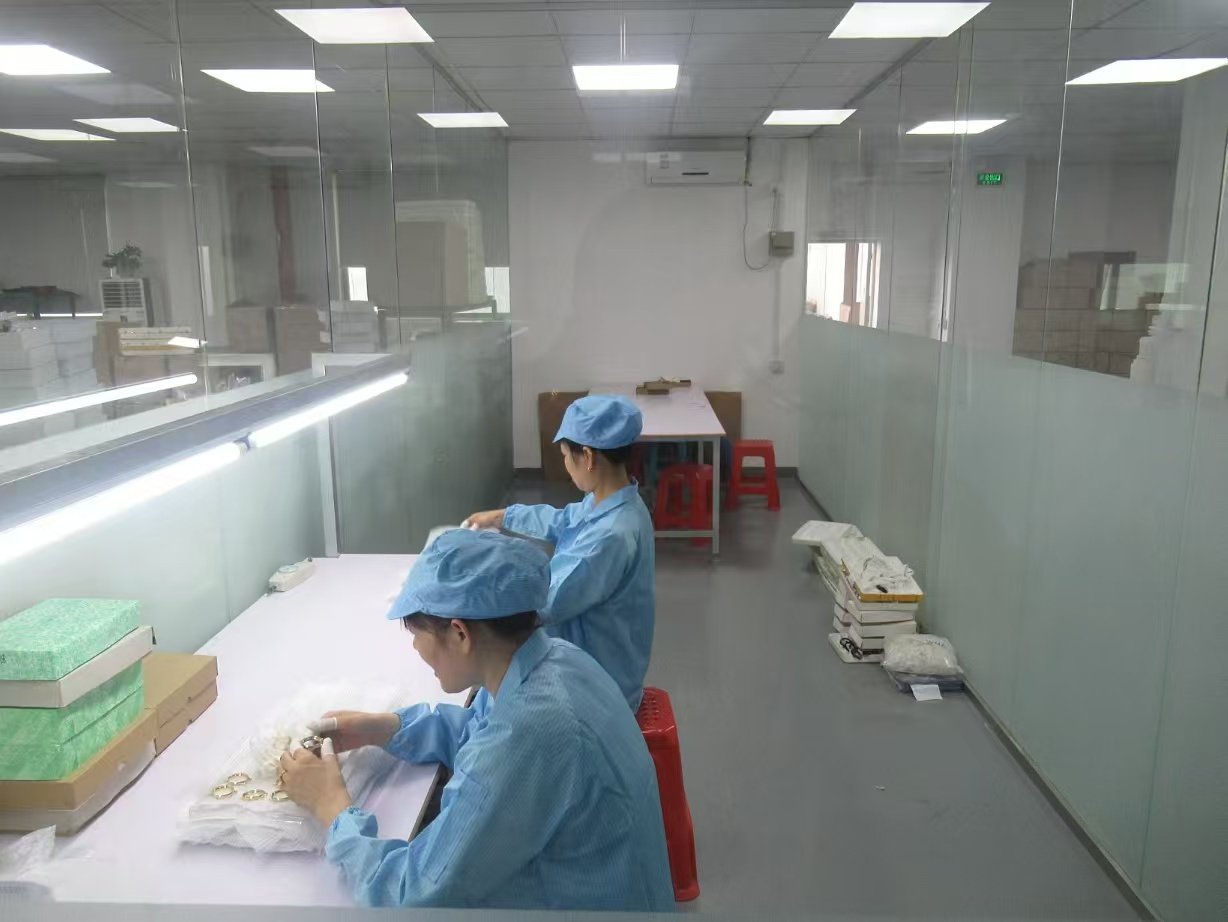
- Weeks 10–12: Final QC, packaging, cartoning, export documentation, final inspection by buyer/3rd party.
Quality control: what “AQL 1.0” means and why you should require it
Professional QC uses AQL (Acceptable Quality Limit) sampling — the internationally standardized method (ISO 2859-1) for deciding whether a production lot passes inspection. AQL 1.0 for critical defects and 2.5 for major defects is the standard respectable brands demand; some factories ship at looser tolerances by default, so specify yours in the purchase agreement. Also ask for: 100% water-pressure testing records for any dive spec, timekeeping regulation logs, and photos or video of the inspection process. A factory that resists documenting its QC is telling you what the QC is.
Certifications: market access isn’t optional
-
- Selling into the EU: CE marking, RoHS and REACH compliance documentation for materials. Your factory must supply these — without them your shipment can be held at customs and your brand exposed legally.
-
- Selling into the US: FTC jewelry-and-watch labeling rules (country of origin disclosure) and, for certain battery-powered goods, FCC considerations. Less paperwork than the EU, but the origin labeling rule is actively enforced.
-
- Movement documentation: if your marketing says “Swiss movement” or “Japanese movement,” your documentation must say so too. Marketing claims that outrun paperwork are a trademark-and-advertising problem founders don’t see coming.
Packaging and logistics: the last 5% of cost, the first 5% of experience
Unboxing is a marketing channel now — treat the box, insert card, and warranty booklet as part of the product. On logistics: understand your Incoterm before you sign. FOB (you take ownership at the port of origin and arrange freight) is standard and usually cheapest via a freight forwarder; DDP (delivered, duty paid) costs more but removes every surprise. For a first run of 200–300 watches, air freight of a few cartons is often only marginally more expensive than sea and four weeks faster — do the math with your factory’s forwarder quotes side by side.
8. Step 7 — Launch: Pricing, Crowdfunding and Your First Sale
Price for margin on day one
The math most first-time founders get wrong: retail price is not “cost plus a bit.” A durable DTC watch brand needs 3–4× landed COGS (cost of goods sold, including freight and duties) as retail price. Why so much? Because after payment processing (1-3%), fulfillment (5–10%), returns (3–5%), and marketing (15–30% of revenue on paid channels), 3.5× is what leaves a real business. Brands that launch at 2× COGS don’t have a brand — they have a job with extra steps.
Three launch routes
-
- Crowdfunding (Kickstarter is still the watch category’s engine). The mechanics: 30-day campaign, video is 60% of the outcome, first 48 hours are decisive, and the honest rule of thumb is that you should be able to bring 20–30% of your funding goal from your own audience before the platform’s algorithm helps. Full playbook — goal-setting math, early-bird structure, and the production-timing trap that kills campaigns — in How to Launch Your First Watch on Kickstarter.
-
- Pre-order drop. Build an email list (2,000+ subscribers is a workable floor), open a 2–3 week pre-order window, use the revenue to fund or complete production. Lower risk, lower ceiling.
-
- Straight DTC launch with inventory. Highest capital requirement, highest margin per unit, and full control of the story. Works when you have audience or distribution already.
Whatever route you choose: under-promise delivery by 8-10 weeks
The most damaging sentence in the microbrand world is “shipping in time for the holidays” followed by a February delivery. Backers and customers forgive almost everything except missed promised dates. Build your public delivery promise from your factory’s timeline plus six weeks of buffer. Founders who do this have passionate communities; founders who don’t have comment sections.
Your first collection, engineered from day one
From design review to golden sample to certified mass production — we’ve walked hundreds of first-time founders through it. See how brands like yours launched with us, then start your project.See Real Brand Case Studies
9. Step 8 — Scale: From One Collection to a Real Brand
Assume your first run sells through. What separates a one-hit watch from a brand is what you do in the 90 days after delivery.
-
- Mine your buyers. Post-delivery surveys and reviews are your collection-two roadmap. The feature requests that repeat three or more times (a sapphire caseback, a smaller case, a GMT hand) are your next design brief, pre-validated.
-
- Keep your production window warm. The founders who scale fastest reorder or launch collection two while their factory still holds their tooling, fixtures and component specs on the shelf. Ask your factory how long they retain project tooling — at ours it’s a standing policy for active brand partners — and plan collection two before setup costs reset.
-
- Deepen the material story. The most reliable ladder we see in the market: stainless collection one, then a limited premium-material drop — Damascus steel or forged carbon, 50–100 pieces — to energize the community and test the $700+ tier before committing to a full premium collection.
-
- Protect the cash cycle. Inventory is cash in hibernation. Most sustainable microbrands cap inventory at 2–3 turns per year and keep 30–40% of working capital liquid for the reorder window. Growth kills more watch brands than failure does.
A watch brand, in the end, is one of the few consumer products where the founder’s fingerprint survives the factory. A hundred and fifty components, chosen by you, assembled by people you know by name, on the wrist of a customer who found your story worth wearing. The roadmap above is the one we’ve watched work. The napkin sketch is yours.
FAQ: What First-Time Founders Ask Us Most
How much does it cost to start a watch brand?
Most first-time founders launch their first collection for $15,000–$40,000 all-in — samples, tooling, production of 200–300 pieces, packaging, freight and duties. A 300-piece stainless steel collection with Japanese movements typically lands at the lower end; Damascus steel or forged carbon projects with Swiss movements sit at the top. Full line-item breakdown: The True Cost to Start a Watch Brand.
What’s the minimum order quantity for custom watches?
Industry-wide, MOQ runs 100–500 pieces per model. Our floor is 100 pieces for stainless steel and 50–100 for premium materials like Damascus and forged carbon, with 1–5 piece sample orders available for design validation. The math of ordering 100 vs 300 vs 500 is explained in Watch MOQ Explained.
How long from design to delivered watches?
Plan on 3–4 months: 1–2 weeks engineering drawings, 6–8 weeks prototyping production, 8–10 weeks mass production, plus transit. Publicly promise delivery 2 weeks after your real estimate.
Do I need to know watchmaking to start a brand?
No — most successful founders start as enthusiasts. You need product taste, a defined audience, and an engineering-capable factory. The vocabulary you do need is in Chapter 3 above.
Will a factory steal my design?
Reputable factories sign NDAs before receiving files and live on repeat business. Sign an NDA first (we provide a template on request), and read Red Flags When Choosing a Watch Manufacturer for the trust signals that matter.
OEM, ODM or private label for a first collection?
Most first-timers are best served by ODM on a proven platform — full visual identity, moderate cost, testable hypothesis. Compare all three models in OEM vs ODM vs Private Label.
About this guide. Written by the engineering and project team at Terison Watch Manufacturing — an OEM/ODM factory specializing in 316L/904L stainless steel, Damascus steel and forged carbon watches for independent brands worldwide. Questions about your own project? Talk to our team — free consultation, NDA on request.